
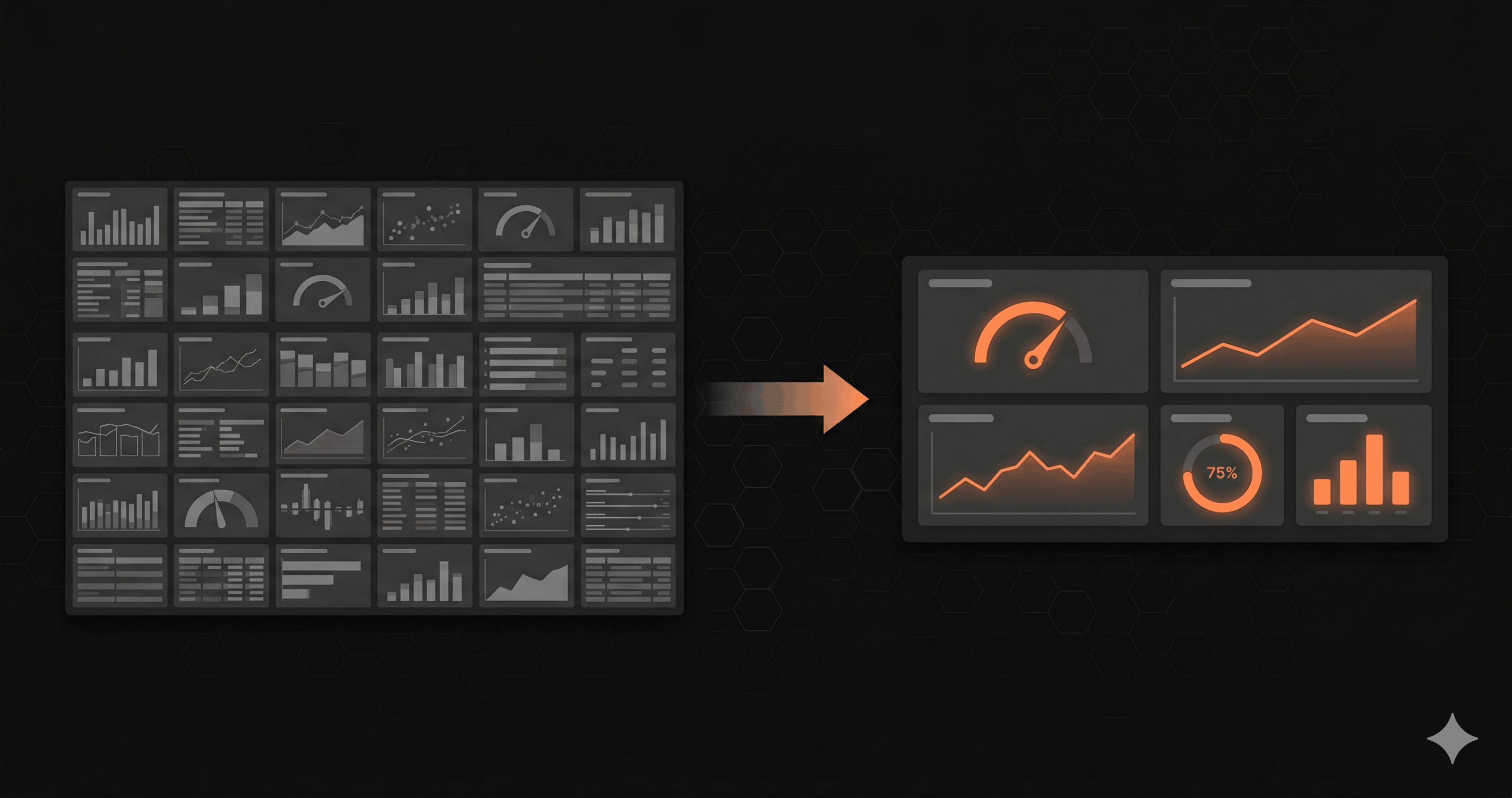
New Relic is one of the most comprehensive observability platforms on the market. APM, distributed tracing, infrastructure monitoring, log management, browser monitoring, synthetic monitoring, mobile monitoring, Kubernetes monitoring — it covers almost everything you could want to measure in a software system.
The question is: do you need all of that?
If you're a platform engineering team running hundreds of microservices, the answer is probably yes. But if you're a developer or small team that needs to know whether your API endpoints are healthy and fast, New Relic might be the equivalent of buying a commercial kitchen to make toast.
The Complexity Tax
New Relic's power comes at a cost — and we don't just mean pricing. The setup process involves:
- Installing language-specific agents (Node.js, Ruby, Python, etc.)
- Configuring instrumentation for each framework and service
- Building dashboards from scratch or customizing templates
- Learning NRQL (New Relic Query Language) to extract meaningful data
- Setting up alert policies with conditions, channels, and workflows
- Managing data ingestion to control costs
For a well-staffed platform team, this is a reasonable investment. For a solo developer or small team shipping a Next.js app, it's days of setup for a problem that should take minutes.
Nurbak's setup is 5 lines of code:
import { initWatch } from '@nurbak/watch'

export function register() {
  initWatch({
    apiKey: process.env.NURBAK_WATCH_KEY,
  })
}
Health checks start running from 4 global regions within minutes. No query language, no dashboard building, no agent configuration.
Pricing: Predictable vs. Variable
New Relic's pricing model is data-based. You get 100 GB/month free, then pay $0.30 per GB. This sounds reasonable until you realize how quickly data ingestion adds up:
- A single APM agent on a busy service can generate 10-50 GB/month
- Infrastructure monitoring adds 5-20 GB/month per host
- Logs can be hundreds of GB/month if not carefully filtered
- Each additional full platform user costs $49-$349/month
A small team with 3 services, basic logging, and 2 users can easily spend $200-500/month — and a traffic spike or logging misconfiguration can double that overnight.
Nurbak's pricing is flat:
| Plan | Price | What You Get |
|---|---|---|
| Free | $0 | 3 endpoints, 5-min checks, 1 region, email alerts |
| Pro | $29/mo | 20 endpoints, 1-min checks, 4 regions, Slack/WhatsApp/SMS |
| Team | $99/mo | 100 endpoints, team roles, API access, unlimited projects |
No per-GB charges. No per-user fees on Pro. No bill anxiety.
What You Get With Each Tool
New Relic gives you:
- Application performance monitoring (APM) with distributed tracing
- Infrastructure monitoring (hosts, containers, Kubernetes)
- Log management with structured querying
- Browser and mobile monitoring (Real User Monitoring)
- Synthetic monitoring (scripted browser checks)
- Error tracking and profiling
- Custom dashboards with NRQL
Nurbak gives you:
- Multi-region API health checks (4 locations, 1-minute intervals)
- Real execution latency (P50/P95/P99)
- DNS, TLS, and TTFB breakdown per endpoint
- Uptime tracking with historical data
- SSL certificate monitoring
- Instant alerts via Slack, email, WhatsApp, and SMS
- Status pages
New Relic does more. Nurbak does less — but does it with zero configuration and predictable costs.
The Complementary Approach
Here's something most comparison articles won't tell you: you might want both.
New Relic excels at internal observability — understanding what's happening inside your application. Nurbak excels at external monitoring — understanding what your users experience from the outside.
APM agents can tell you that a database query took 500ms. They can't tell you that your API is unreachable from São Paulo because of a CDN misconfiguration. Multi-region external monitoring catches the issues that internal instrumentation is blind to.
If you're already using New Relic for APM and love it, adding Nurbak for external API health checks gives you a complete picture without adding more New Relic complexity or data ingestion costs.
When to Use New Relic
- You have a platform engineering team with bandwidth for setup and maintenance
- You need distributed tracing across microservices
- You need log management with structured querying
- You need browser/mobile RUM
- Your budget supports variable data-based pricing
When to Use Nurbak
- You need to monitor API endpoints — health, latency, and uptime
- You want setup in minutes, not days
- You need predictable pricing without per-GB or per-user fees
- You want multi-region checks by default
- You're a solo developer or small team without a dedicated DevOps function
The Verdict
New Relic is an excellent observability platform for teams that need it. If you're running complex distributed systems and need deep visibility into every layer, it's hard to beat.
But for API monitoring specifically — knowing whether your endpoints are up, fast, and healthy from your users' perspective — Nurbak is simpler, cheaper, and faster to set up. It does one thing well, and that's exactly the point.
Try it yourself:Start monitoring your APIs for free — setup takes under 5 minutes. Or see the full feature breakdown on our New Relic alternative page.